Is It Safe to Connect Your Wallet to a Website?
Connecting is mostly fine. Signing is where it goes wrong. Here's the difference and the rules that keep you safe.

Merlin
Author
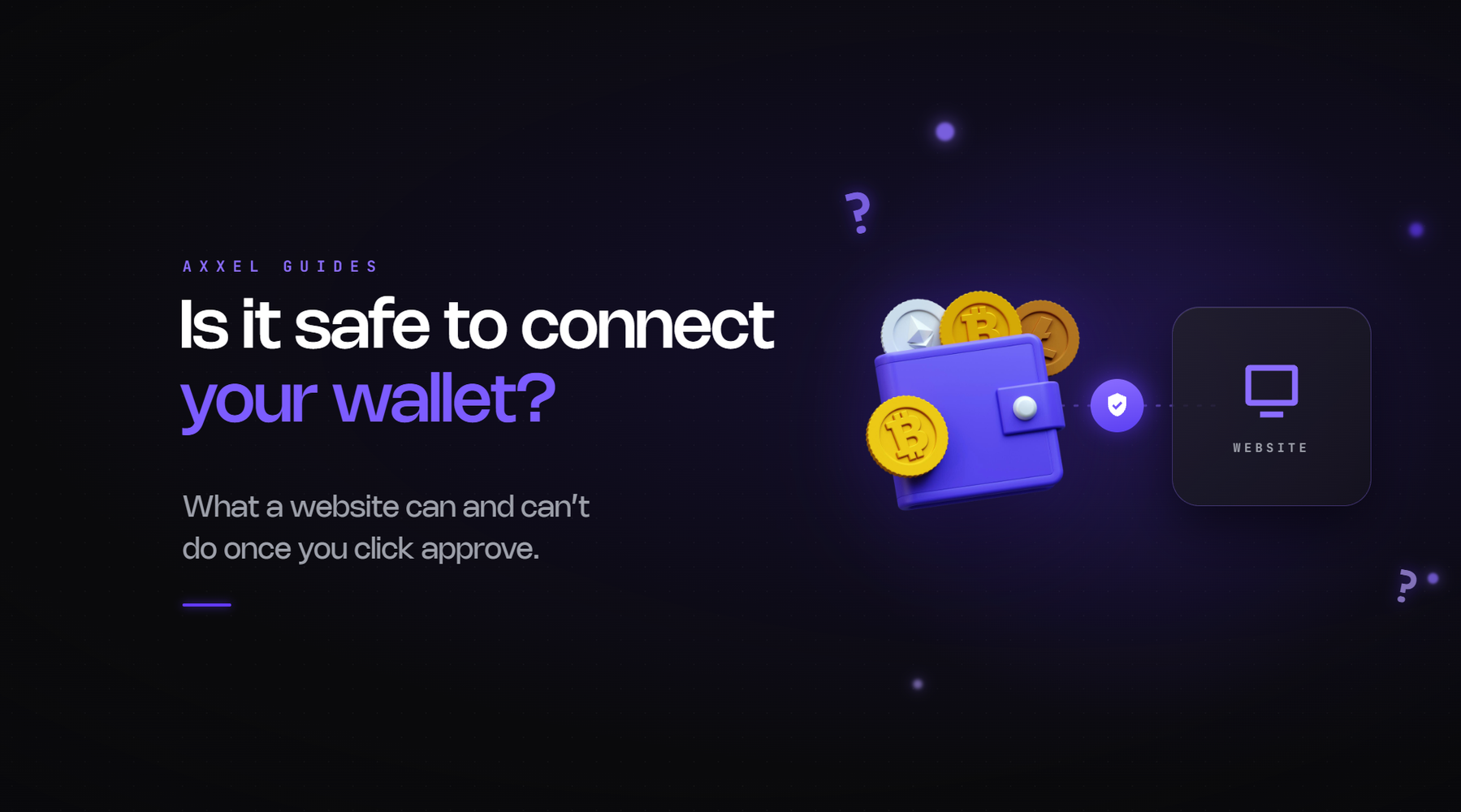
The "connect wallet" button is on every on-chain site, and it's the step people are most nervous about. The honest answer is that connecting is nearly always safe. The danger is in what comes after, and it's worth knowing exactly where the line is.
What connecting does
It tells the site your wallet address. That's it. The site can now see your public balances, show you your tokens, and prepare transactions for you to approve.
It cannot move your funds. It cannot see your seed phrase. A connected site has the same access to your money as anyone who knows your address, which is everyone, because addresses are public.
What signing does
Signing is where you grant something. There are three kinds, and they're very different.
A transaction. You're authorising a specific action: swap this, send that. It executes once, and what it does is what the wallet shows you before you confirm.
An approval. You're giving a contract permission to move a specific token out of your wallet, up to a limit, until you revoke it. This persists. A site you used once a year ago can still have it. The full mechanics are in token approvals explained.
A message signature. No transaction, just you signing a piece of text. Usually harmless, used for logging in. Occasionally the text is a permission in disguise, and signing it does the same as an approval without the gas fee. If a signature request contains anything that looks like a token amount, a spender, or a deadline, treat it as an approval.
The requests to refuse
Approvals on tokens unrelated to what you're doing. You came to mint an NFT and it wants unlimited access to your USDC. No.
"Verify your wallet" pop-ups. Especially ones that arrive after a DM or a link. Verification is the pretext; the signature is the point. How wallets get drained covers the pattern.
Unlimited approvals when you only need one trade. Set exact amounts where the interface allows it.
Anything urgent. Countdown timers, "claim expires in 10 minutes." Legitimate things don't need you to skip reading.
Sites you reached through a link. DMs, replies, QR codes. Bookmark the real URL and only ever use the bookmark.
Setting up so a mistake can't hurt you
This is the part that actually protects you, because everyone eventually signs something they shouldn't.
Separate wallets. One for holdings that never connects to anything. One for trading. One burner for anything new or unknown. A bad signature then costs the burner's balance, not your life. The wallet setup guide is ten minutes.
Hardware wallet for the holdings. The cold one never touches a browser.
Revoke approvals regularly. A quick check every month or two. Approval-checker tools show every live permission and let you kill them.
Disconnect when you're done. Minor, but it's a habit that keeps the active surface small.
Read every signature. Every one. If the wallet says what it's about to do and you don't understand it, that's the answer.
Solana versus EVM
On Ethereum, Base and BNB Chain, standing approvals are the main risk, and revoking them is the main hygiene. On Solana the approval model is different and drains more often work through a single transaction that does more than it appeared to, so the discipline there is reading the transaction before signing rather than cleaning up afterwards. Same principle either way: the signature is the moment of risk, not the connection.
If you've already signed something bad
Move everything of value out of that wallet to a clean one, now. Then revoke every approval on the compromised wallet. Then stop using it. Speed matters more than understanding what happened; you can work that out after the funds are safe.
The honest summary
Connect freely. Sign carefully. Keep the money that matters in a wallet that never does either.
That's the whole discipline, and it's also why a non-custodial bot with its own fresh wallet is cleaner than a browser wallet that's been connecting to sites for a year. There's no approval history to inherit. What non-custodial means covers the custody side.
Axxel runs on Turnkey's key infrastructure across Ethereum, Base, BSC, Solana and Robinhood Chain, with market, limit, trailing and sniper orders, stop loss and take profit, MEV protection and configurable slippage. Flat 0.9%, non-custodial, no subscription.
The button isn't the risk. The thing it asks you to sign afterwards is.
Crypto trading carries risk. Most memecoins lose value. Nothing here is financial advice. Axxel is not available in all regions.